Permanent Makeup
The Art of Natural Brows
There are only three brow techniques. The rest are marketing names.
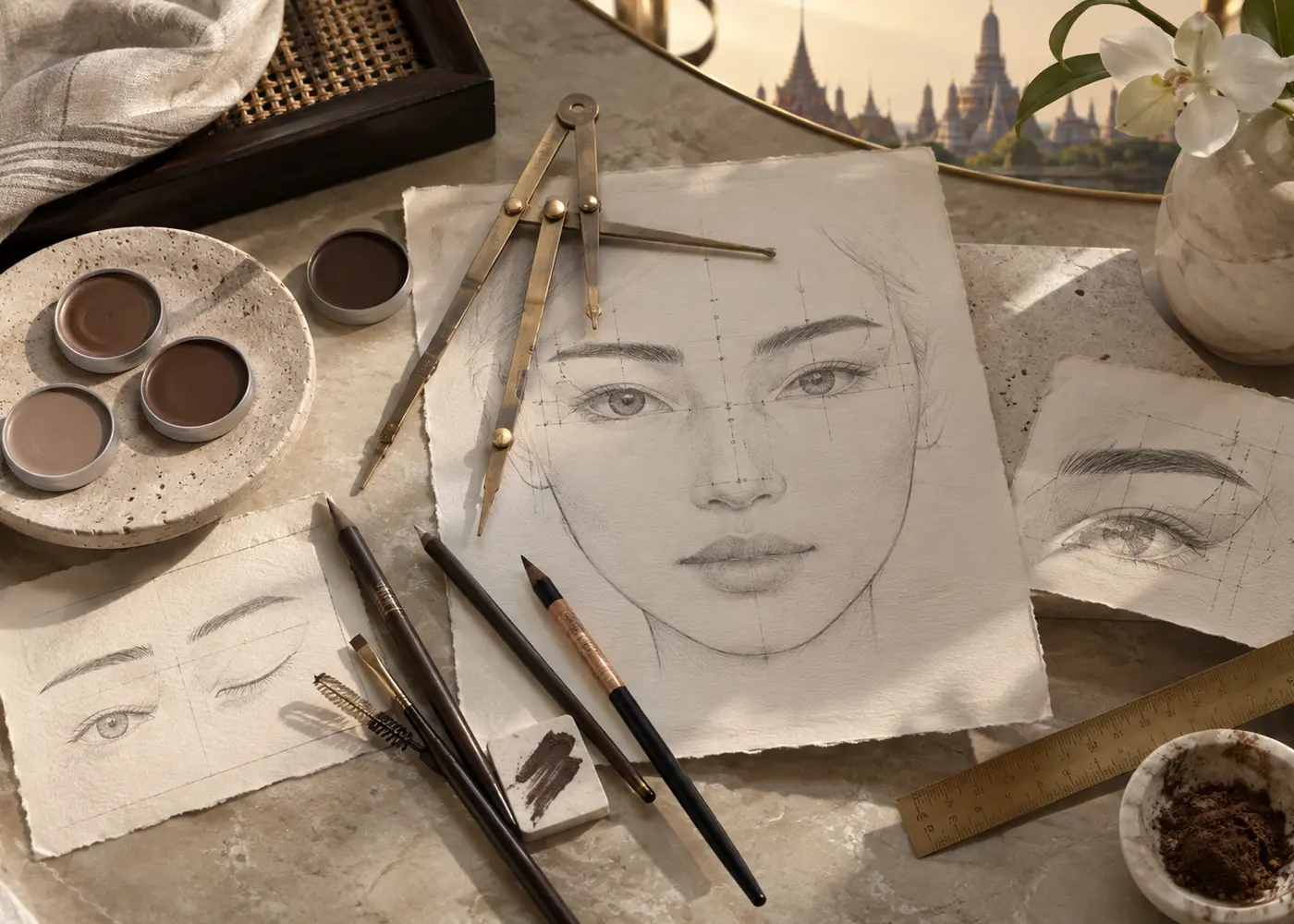
Brow tattooing has only three forms: hair stroke, shading, and hybrid. Names like 3D, 6D, ombré or duo brows all sit inside those three. The real differences are the tool, the depth of pigment, and the particle size of the pigment used.
Permanent versus semi-permanent
Permanent brow tattooing places large-particle pigment deep in the dermis. It lasts roughly 15–20 years but is hard to correct, and over time the colour can shift green, grey or purple. As facial muscles change, the shape can drift out of position.
Semi-permanent work sits in the upper dermis using nano or micro pigment. Because the particles are smaller, both stroke and shaded results are possible. It lasts roughly one to three years and is far easier to adjust when the face changes or the client wants a different shape.
The three techniques that actually exist
One: hair stroke, which imitates real brow hairs and reads naturally on a bare face. Two: shading, which imitates a pencilled brow and fills sparse areas with definition. Three: hybrid, which runs strokes from the head to the middle of the brow and shading through the tail.
Blade versus machine
A manual blade — microblading — makes a fine incision and copies hair direction well, but cannot cross strokes or grade weight, and because it leaves an open wound the area must stay dry for about seven days.
Machine hair stroke returned to popularity around 2019, as smaller pigment particles and steadier machines made fluid, graded strokes possible. It breaks the skin less, so the area can get wet sooner, but it demands considerably more skill.
Choosing what suits you
Oily skin with larger pores usually suits shading or hybrid better than pure strokes, which can blur. Normal to dry skin holds strokes beautifully. The best decision comes from a consultation with the shape mapped on your actual face before anything begins.